TikTok Reverse Image Search: How It Works, What It’s Used For, and How to Protect Yourself
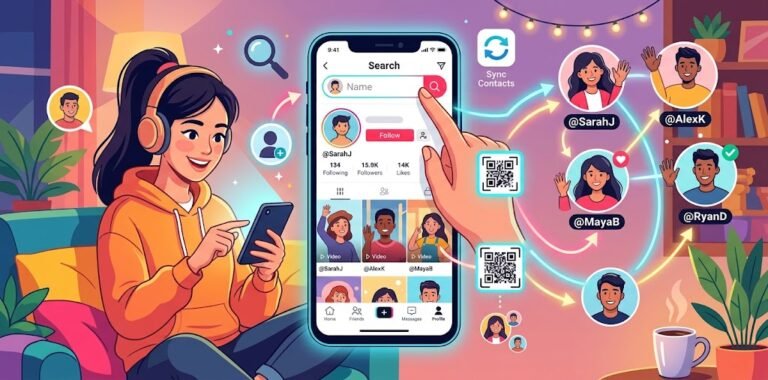
If you’ve ever wondered how some tools claim to identify a TikTok account just from a photo, you’ve run into the concept of TikTok reverse image search. It sounds like a simple feature, but it’s actually a mix of computer vision, facial-matching algorithms, and public data scraping and it comes with a set of trade-offs that most people never think about until they’re affected by them.
This guide breaks down how the technology actually works, where it’s genuinely useful, and just as importantly where it crosses into privacy territory you should be cautious about.
Key Takeaways
- TikTok reverse image search refers to tools that match a photo against publicly visible profile pictures and video content to surface possible account matches.
- These tools rely on facial recognition or image-similarity algorithms, not TikTok’s own search system TikTok has no native reverse image search feature.
- Legitimate uses include verifying a business account, checking if your own content has been reposted without credit, or confirming a creator’s identity before a brand deal.
- The same technology carries real privacy risks: it can be used to identify strangers without consent, which raises both ethical and, in some jurisdictions, legal concerns.
- You can reduce your own exposure by controlling who can view your profile picture, avoiding face-forward thumbnails on public content, and checking image permissions regularly.
- No reverse-search tool can retrieve deleted or deactivated accounts claims otherwise are a red flag for scams or unsafe data practices.
What Is Reverse Image Search on TikTok?
Reverse image search, in general, means uploading an image instead of typing text, and having a tool search for visually similar images across the web. Google Images and TinEye popularized this for general photos years ago. Applying the same concept to TikTok means searching an image against publicly available profile pictures, video thumbnails, and sometimes video frames, to look for a possible match.
Important distinction: TikTok itself does not offer this feature. There’s no built-in “search by photo” button in the app. Any tool offering this is a third-party service built on top of publicly scraped TikTok data not an official TikTok product.
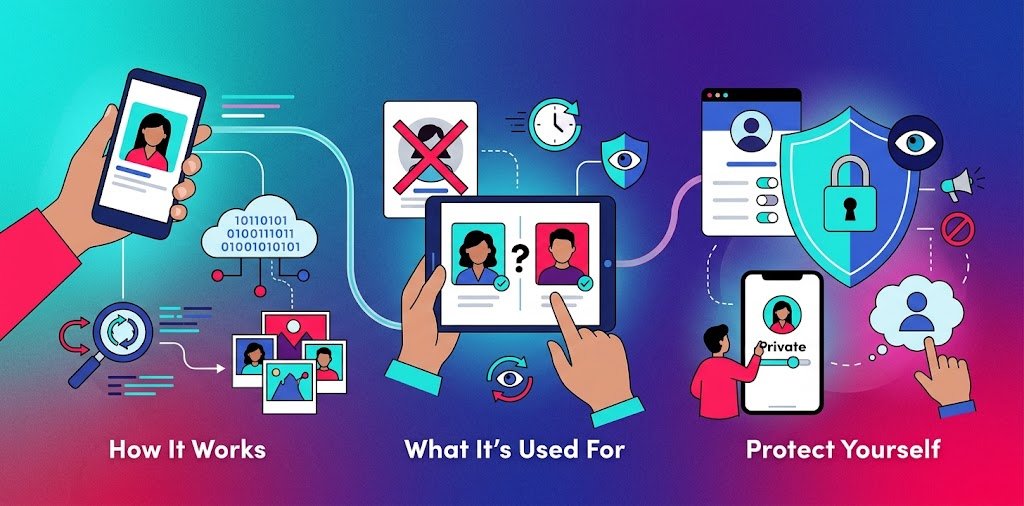
How These Tools Actually Work (High-Level)
Most services offering a tiktok face search or tiktok identifier function rely on a version of this pipeline:
- Face or image encoding — the uploaded photo is converted into a mathematical representation (a “vector”) of facial features or image characteristics.
- Database comparison — that vector is compared against a database of previously indexed public images, often scraped from public TikTok profiles.
- Similarity scoring — the tool returns matches ranked by how closely they resemble the uploaded photo, not a guaranteed identity match.
It’s worth understanding that similarity scoring is probabilistic, not exact. False positives are common, especially with low-quality photos, similar-looking individuals, or partial face angles. A high similarity score is not proof of identity.
Legitimate Use Cases
Not every use of this technology is problematic. A few genuinely reasonable scenarios:
- Brand and creator verification — confirming that a creator claiming a partnership actually owns the account they say they do.
- Content ownership checks — reverse-searching your own photos to see if your content or likeness has been reused on an account without your permission.
- Business account discovery — a business trying to find its own or a partner’s account when the exact username was lost or changed.
For these narrower, self-directed use cases, a tiktok account finder style tool that works from a known username or business name — rather than a stranger’s photo is usually a safer and more accurate starting point. Our own TikTok Profile Finder, for example, is built around username and handle-based lookups for exactly this kind of legitimate account verification.
Where This Crosses Into Privacy Risk
The same underlying technology that verifies a business account can just as easily be used to identify a private individual from a photo taken without their knowledge at a coffee shop, in a crowd, from a dating app screenshot. This is where TikTok reverse image search tools raise real concerns:
- Consent — the person in the photo never agreed to have their face searchable this way.
- Accuracy — false matches can misidentify someone entirely, leading to real harm.
- Downstream misuse — identification is often the first step toward stalking, harassment, or doxxing, even when the original searcher’s intent was harmless curiosity.
Several countries and U.S. states have started regulating facial recognition technology specifically because of these risks (Illinois’ BIPA law is a notable example). If you’re building or using tools in this space, it’s worth understanding that the legal landscape is shifting quickly and unevenly across regions.
Reverse Image Search Tools vs. Username-Based Lookup
| Reverse Image Search | Username-Based Lookup | |
|---|---|---|
| Input required | A photo | A name, handle, or partial username |
| Consent risk | Higher — can identify strangers without their knowledge | Lower — searches are based on info the account holder chose to make public |
| Accuracy | Probabilistic, prone to false matches | High, when the username or handle is close to correct |
| Best suited for | Verifying content ownership, brand checks | Reconnecting, verifying, or finding a known person’s account |
Pros and Cons of Reverse Image Search Technology
| Pros | Cons |
|---|---|
| Useful for verifying content theft or misuse of your own image | Can identify people without their consent |
| Helps confirm legitimate business or creator accounts | Prone to false-positive matches, especially with low-quality photos |
| No need to already know a username | Raises legal and ethical concerns depending on jurisdiction |
| Can flag impersonation accounts using your photos | Cannot recover deleted or deactivated accounts despite some marketing claims |
How to Protect Your Own Photos From Being Reverse-Searched
If the privacy side of this concerns you and it reasonably should a few practical steps help reduce your exposure:
- Limit face-forward profile pictures on public accounts, or set your account to private if you don’t need public discoverability.
- Check where your photos are reused. Periodically reverse-search your own profile picture to see if it’s been indexed or reposted elsewhere without credit.
- Review app permissions for any third-party tool you’ve connected to your TikTok account some request more data access than they need.
- Report impersonation accounts using TikTok’s built-in reporting tools if you find your photo used on an account that isn’t yours.
- Avoid uploading identifiable photos to third-party “search by face” tools yourself you have no control over how long that image is retained once submitted.
Frequently Asked Questions
Does TikTok have an official reverse image search feature?
No. TikTok’s native search is text-based only (username, hashtag, keyword). Any photo-based search tool is a third-party service, not part of TikTok’s own platform.
Is reverse image search on TikTok legal?
It depends on jurisdiction and use case. Searching your own images or verifying business accounts is generally low-risk. Using it to identify private individuals without consent can run into privacy law issues, particularly in regions with biometric data regulations.
Can reverse image search find deleted TikTok accounts?
No. If an account has been deleted or deactivated, its data is generally removed from TikTok’s servers and won’t appear in a reverse-search database, regardless of what a tool claims.
How accurate are these tools?
Accuracy varies significantly by tool and photo quality. Even well-built facial-matching systems produce false positives, so results should be treated as leads, not confirmed identities.
Can I stop my TikTok photos from being searchable this way?
You can reduce exposure by setting your account to private, avoiding face-forward public profile pictures, and monitoring where your images appear online, though no method guarantees complete protection once a photo has been public at any point.
Conclusion
TikTok reverse image search sits at an interesting intersection of useful technology and real privacy risk. Used for verifying your own content, checking business accounts, or catching impersonation, it solves a genuine problem. Used to identify strangers without their knowledge, it raises consent and legal concerns that are worth taking seriously. If your goal is finding or verifying a specific, known account rather than identifying someone from a photo, a username-based tool like our TikTok Profile Finder is generally the more accurate and more respectful place to start.